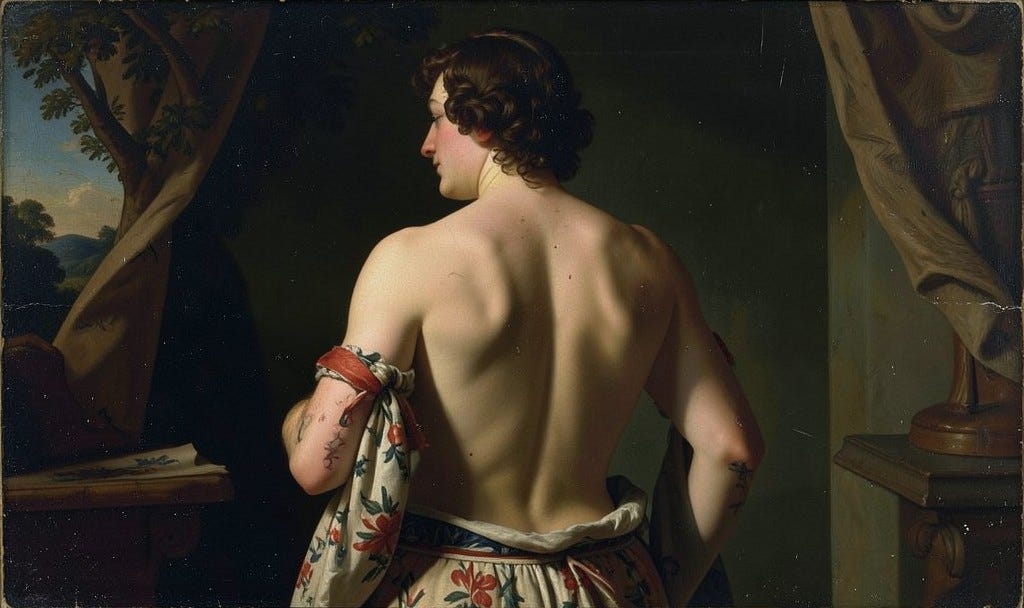
This is the age where they want to erase the line between male and female, a mother and the baby inside of her, parents and children. Drawing a line invites hostility these days. So yes, it’s unpopular, but there’s a bigger and more important issue at hand.
Can anything we create actually survive without boundaries?
Start a marriage, and immediately there are boundaries around it. Start a business, and you need a budget, a mission, and a clear distinction between company money and personal money. Start a nonprofit, and eventually you have to learn to say, “That’s a worthy cause, but it isn’t what we do.”
Write a song, and it has a beginning and an ending.
Take a photograph, and it has a frame.
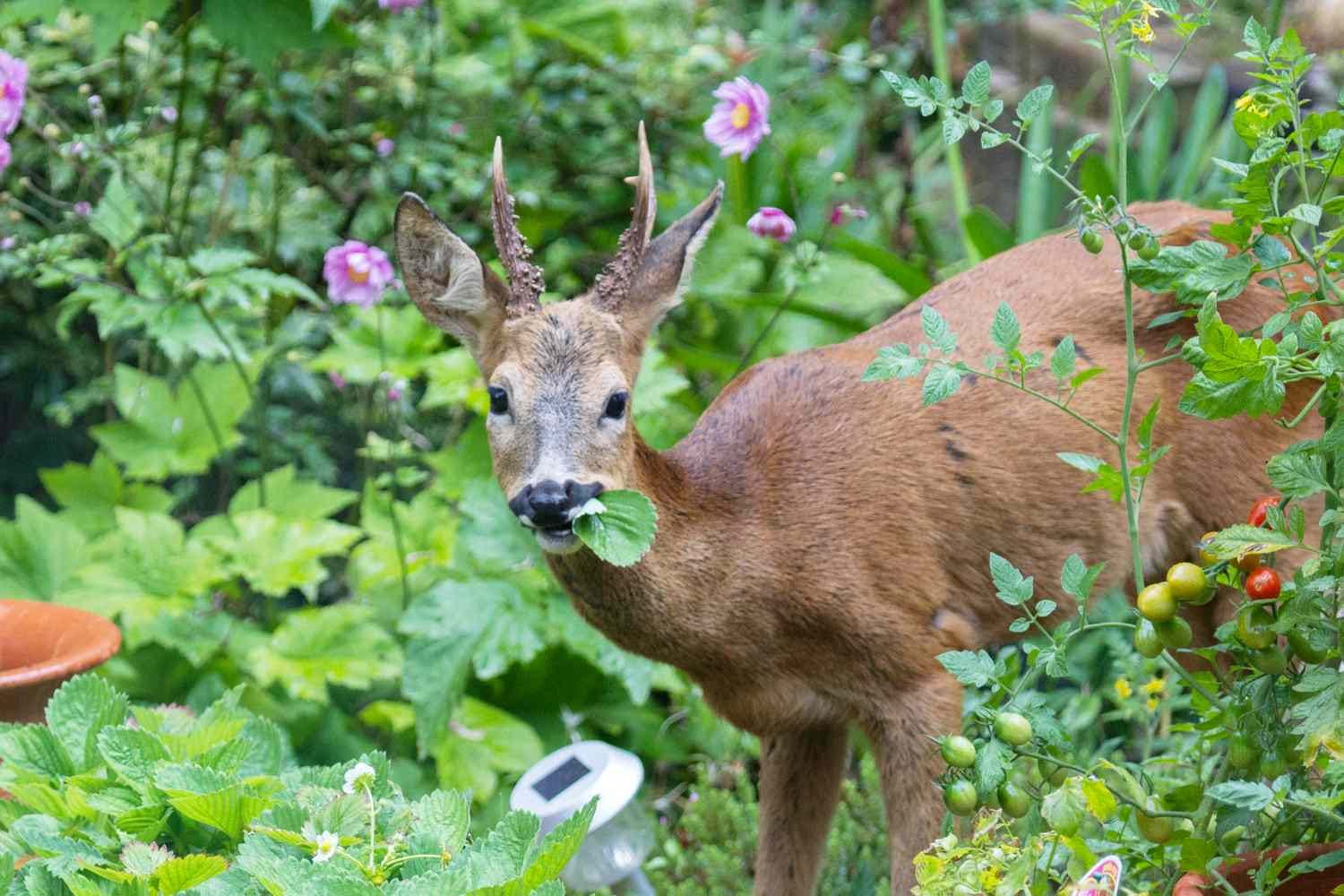
Plant a garden, and eventually you discover why people build fences.
Whenever we create something valuable, we soon face a question:
How do we protect this thing so it can survive long enough to become what it was created to be?
And that’s when we notice something on the first page of the Bible.
God creates. We give him a lot of glory for the things that he creates, from sun, moon, and stars to the tears of a baby, but we seldom think about perhaps his greatest gift to creation, and that is structure—Boundaries.
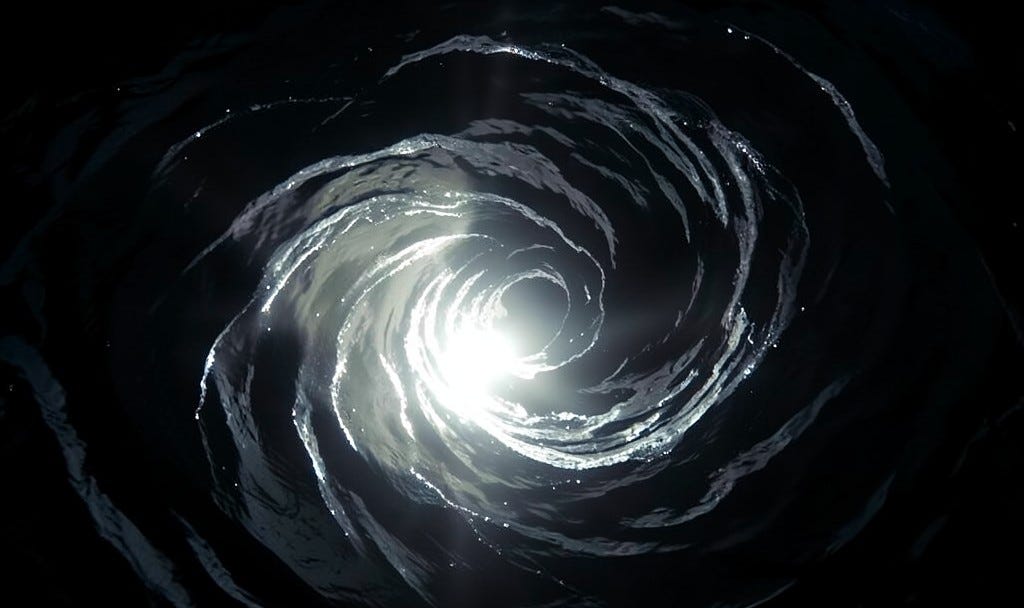
God enters into a swirl of chaos in order to bring life out of all that mess, and He does it by drawing lines.
Creation Begins With Distinction
Genesis 1 describes the primordial earth as tohu va-vohu—usually translated “formless and void.” It means that the thing has no boundary, no structure like just an endless oozing goo, and because it has no boundary, it also has no meaning, identity or purpose.
Something with potential is there: darkness, water, the deep. But it isn’t yet in an ordered, inhabitable state.
Then God speaks.
“Let there be light.”
Notice what happens next:
“God separated the light from the darkness.”
The Hebrew verb is badal—to separate, divide, distinguish.
God creates light, then establishes a distinction.
Light is not darkness. Darkness is not light.
This is this.
That is that.
And the pattern continues.
Waters above and waters below. Sea and dry land. Plants and animals according to their kinds. Day and night. Seasons and years. Eventually, male and female.
Creation produces distinct things with distinct identities. Distinct things need identifying names and labels. Sun, moon, God, human, male and female.
And once something has an identity, that identity becomes something worth protecting.
Genesis begins with water everywhere. But God doesn’t destroy the water. He gives it limits.
Job 38 pictures God saying to the sea:
“Thus far shall you come, and no farther.”
And once the water is bounded, dry land appears.
Now plants can grow. Animals can live. Humans can build and cultivate.
The boundary doesn’t destroy the sea or the land. It allows both to exist with their distinctiveness intact.
Our Body Has a Boundary
Your own body works this way. All of our bodies have a lot going on. We have lungs, heart, and large and small intestines, but around all of it is our skin.
Your skin is a boundary. Without it, you’d puddle up and die.
But your skin doesn’t prevent you from interacting with the world. You touch through it. Feel through it. It is your interface by which you can engage other created things in the world.
A healthy boundary allows you to interact with something else without ceasing to be yourself versus entering the membrane of another and being absorbed.
That’s a very different way to think about boundaries. Most people just think of them as restrictions.
Gray Goo
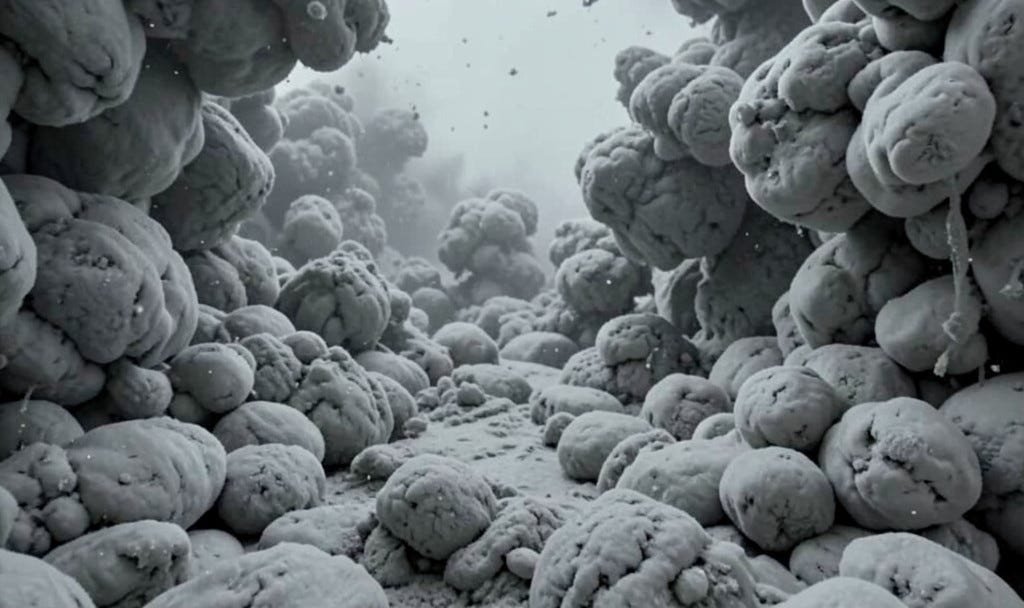
A World Being Overtaken by Grey Goo
There’s an old thought experiment from nanotechnology called the “grey goo” problem.
Imagine microscopic self-replicating machines that consume the material around them to make more copies of themselves.
Eventually everything gets converted into more of the same thing.
Trees. Animals. Buildings. Ecosystems. All dissolved as building material for a spreading nanobot grey goo until there is nothing else in the world.
Whether that scenario is technologically realistic isn’t the point. (And I really, really hope not.) But it’s a clear illustration of why boundaries are so important in creation.
Distinction in Diversity
Look at a rainforest. Trees, insects, birds, fungi, water, soil, predators, prey—thousands of different organisms interacting while remaining distinct.
The bee can have a relationship with the flower precisely because the bee isn’t the flower.
Grey goo moves the other direction.
Difference disappears.
Everything becomes everything else: Parent-child, sacred-secular, man and woman—all one thing on a sliding scale.
This is not the message of the Bible. Genesis 1 recognizes increasing distinction, complexity, relationship and life.
The God of Creation makes differences matter. We don’t need a world where everyone wears gray flannel and speaks Esperanto. Spices must remain distinct. Cultures and their languages are beautiful. The variety of creation is its beautiful strength.
But this strength disappears without boundaries. If you mix all the paint together, you just get gray.
Learning to Distinguish
This idea of Badal continues into Israel’s holiness code.
Leviticus tells the priests:
“You are to distinguish between the holy and the common, and between the unclean and the clean.”
There’s that idea again: badal.
Distinguish.
Everything isn’t interchangeable.
Every desire doesn’t need to be acted upon. Every relationship doesn’t have the same boundaries. Every opportunity isn’t your assignment. Every dollar isn’t yours to spend however you please. Everything does not belong to you. Your neighbor’s cattle are not your cattle.
Maturity requires learning to distinguish.
What about Jesus?
Jesus challenged plenty of human boundaries. He touched lepers, ate with people others rejected and crossed social lines that religious people defended.
But Jesus himself wasn’t boundaryless.
He withdrew from crowds. He went away to pray. He slept. He chose twelve. He didn’t heal every sick person in the Roman Empire or personally visit every village.
He knew who he was, whose he was, and what his Father had given him to do.
And that meant there were thousands of good things he didn’t do.
In your personal life
Maybe some of the limitations we experience in life aren’t defects.
Maybe the boundaries in your life are like the banks of the river. A river without banks is not a better, freer river.
A river without boundaries is a flood—a force of destruction.
So Here’s a practical question I think each of us should be asking right now so that this Bible teaching can have fruit in our lives:
Where have the distinctions disappeared in your life? Where do you need to reestablish stronger lines?
Maybe work and home have become one continuous stream. You’re at dinner but answering messages. You’re “resting” but checking email.
Maybe every need you hear about feels like your responsibility.
Has a lack of boundaries limited your creativity? Maybe you have twenty creative ideas and twelve unfinished projects because you can’t bring yourself to choose just one, since that means limiting yourself from following other possibilities.
Maybe what you need isn’t greater intensity. Maybe you don’t need to work harder.
Maybe what you need to do is badal. You need to discern and divide and recognize the different categories things go into.
This is work time.
This is rest time.
This is mine to carry.
That isn’t.
This belongs inside my marriage.
That doesn’t.
This is enough.
My line stops here.
Think about one thing God has entrusted to you that matters enough for you to protect. It might be your marriage, family, calling, creative work, business, ministry, relationship with God.
Then ask:
What boundary does this precious thing need in order to survive and become fruitful?
Maybe it’s a relationship with one of your children or grandchildren. Maybe this relationship needs a boundary of time set aside to nurture it.
Maybe you need financial boundaries: ways you will and will not spend or invest your money.
Maybe you need to create creative space, a literal space with a literal budget of time, just for you to exercise more creativity. If you want to be a writer, you need a writer’s desk, and you need a time of day that is your writing time. You need to close off all other distractions and do the thing that belongs inside that boundary space.
If you want your life to thrive draw those lines, friend!
Not because you’re afraid of what’s outside the lines, but because you love what’s growing inside it and you want it to flourish, be fruitful and multiply.
A boundary isn’t simply where something ends.
It’s what allows precious things to keep existing at all.